
Keep knocking. I'm not going anywhere.
Uppal's story
Read the storyClear, practical information for anyone who has had, or is about to have, a total laryngectomy, and for the family and friends who care for them.

A total laryngectomy is an operation that removes the larynx and the epiglottis. It is often done when cancer of the larynx is at an advanced stage.
The larynx, or voice box, does more than make your voice. It holds the vocal cords that create sound, and it also plays a part in breathing and swallowing. When it is removed, all three change.
During the operation, the surgeon separates your windpipe from your food pipe for good. The top of the windpipe is then brought to a new opening at the base of your neck. From now on, every breath you take goes in and out through this opening. Its medical name is a tracheostoma, but most people simply call it a stoma.
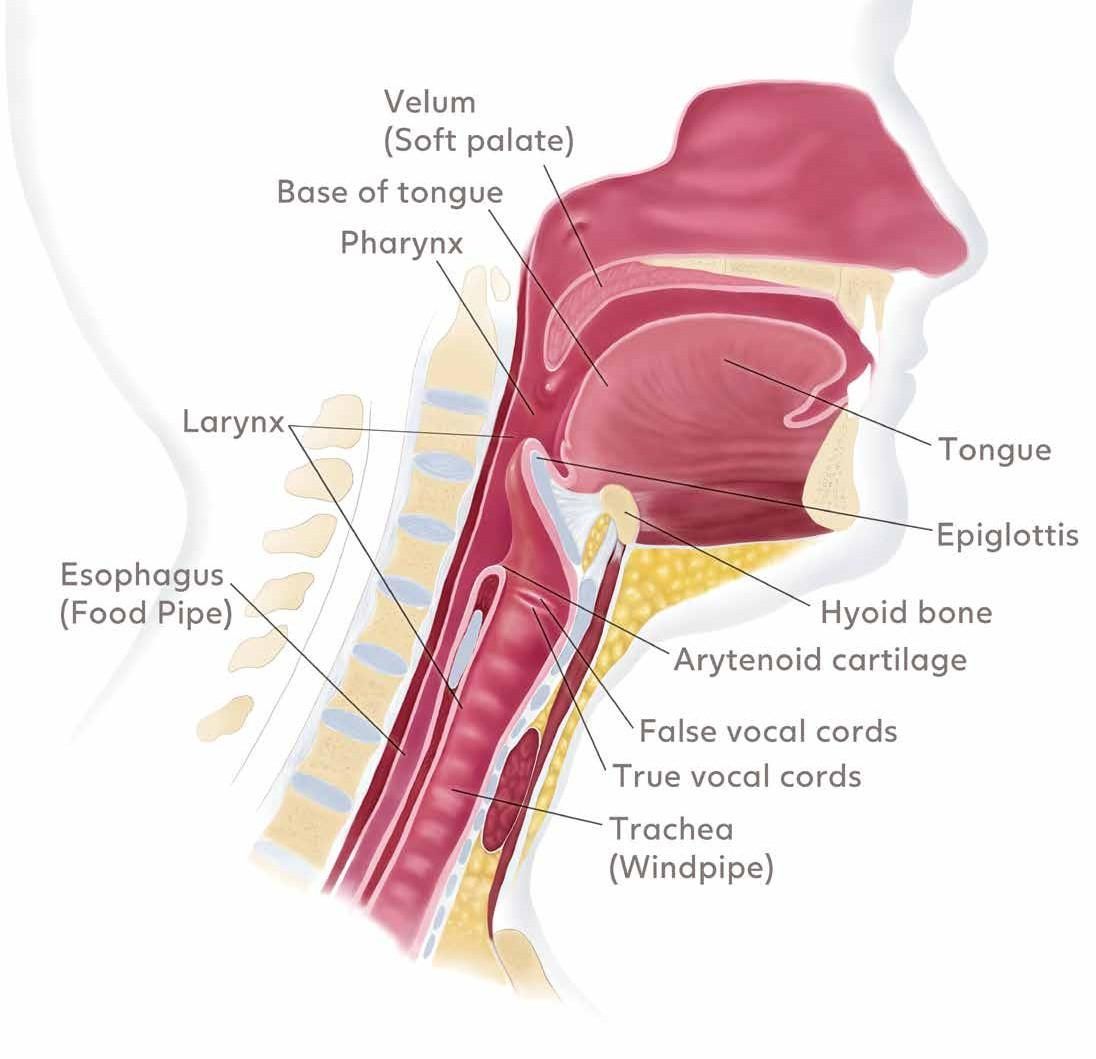
Air flows in through your nose and mouth, past the larynx and down the windpipe to your lungs.
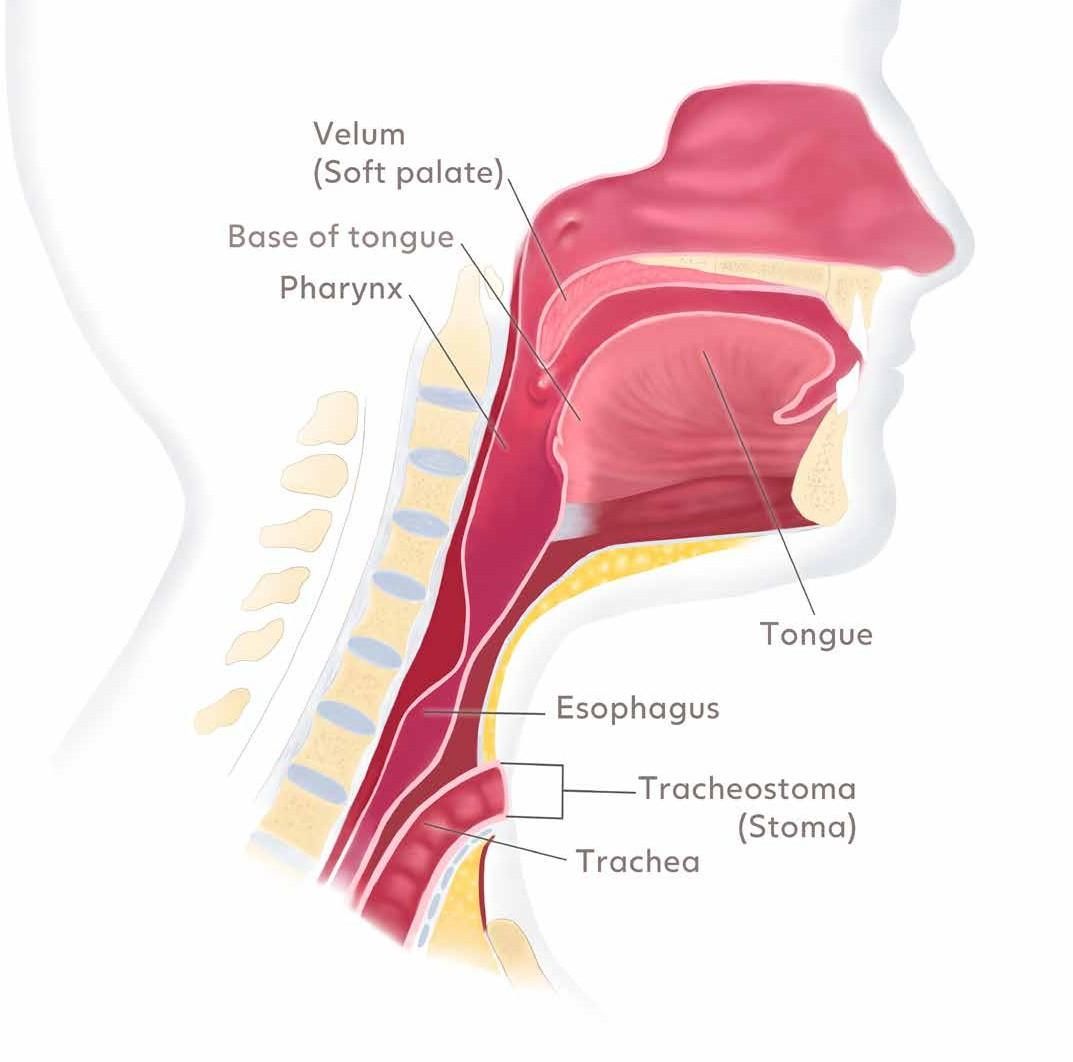
The windpipe ends at the stoma in your neck. Your nose and mouth are no longer connected to your lungs.
In an emergency, oxygen and rescue breathing must be given to the stoma, not the nose or mouth. Keep our emergency page saved on your phone to show anyone helping you.
Looking after your mind and body, and finding people who understand.
The medical words you will hear, explained in plain language.
Keep knocking. I'm not going anywhere.
Uppal's story
Read the storyWould you like a neck breather bracelet, or to share your own story of life after a laryngectomy? Write to us.