Speaking again
Without a voice box you cannot speak the way you did before. But there are proven ways to find your voice again, and most people do.

How your voice worked before
Before surgery, your voice came from the vocal cords inside your larynx. As you breathed out, air passed between the vocal cords and made them vibrate. Your lips, tongue and teeth then shaped that sound into words.
After a laryngectomy, the vocal cords are gone, so you need a new source of sound. Your lips, tongue and teeth still do the shaping, just as before.
Your speech therapist (also called a speech-language pathologist or SLP) will help you find the right method, and may give you exercises to make your new voice as clear as possible.
Three ways to speak again
| Voice prosthesis | Electrolarynx | Esophageal speech | |
|---|---|---|---|
| Where the sound comes from | Air from your lungs vibrates the tissue of your food pipe | A small electronic device | Air you swallow vibrates the tissue of your food pipe |
| When you can start | Once you have healed | Often soon after surgery | After training, which can take a long time |
| How long to learn | Usually a few weeks | Quick to pick up | Hard to learn, and not everyone can |
| Needs a device | Yes, fitted by your clinician | Yes, a hand-held device | No |
| Hands-free | Possible, with a hands-free valve | No | Yes |
Voice prosthesis
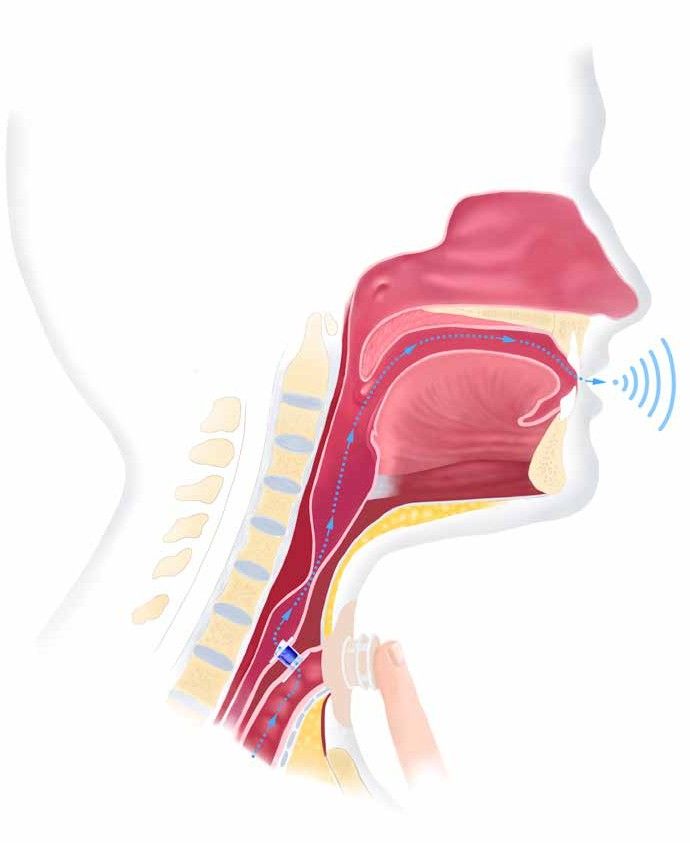
A voice prosthesis is a small plastic device with a one-way valve. It sits in the wall between your windpipe and your food pipe, in a small opening the surgeon makes, called a tracheoesophageal (TE) puncture. It can be fitted during your laryngectomy or after you have healed.
To speak, you cover your stoma with a finger. Air from your lungs then flows through the valve into your food pipe. The tissue there vibrates to make sound, which travels up to your mouth where you shape it into words, just as before. The valve stays closed when you swallow, so food and drink cannot get into your windpipe. This is called TE speech.
Why people choose it
- Good voice quality and clarity
- Relatively quick and easy to learn
- Most people can speak usefully within a few weeks
- Many people can learn to speak hands-free with a special valve
A voice prosthesis usually needs to be changed by your clinician every few months. There are two main kinds:
- Indwelling. Fitted and changed by your clinician. Most voice prostheses are this kind.
- Non-indwelling. One you learn to remove and replace yourself. It is not suitable for everyone, and your clinician will decide whether you are a candidate. It can suit people who find it hard to travel regularly to have their prosthesis changed.
If your prosthesis keeps leaking quickly, ask your clinician about other designs. Some are made to resist the bacteria and fungus that cause leaks through the valve. Others have a wider, softer edge to stop leaks around the prosthesis.
Electrolarynx
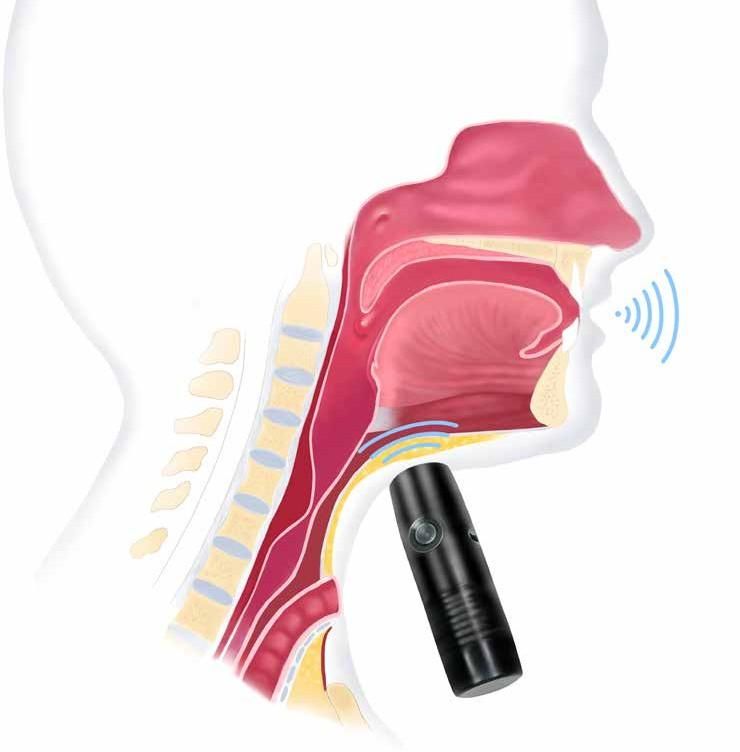
An electrolarynx, or artificial larynx, is a small battery-powered device that makes a sound. You hold it against your neck or cheek, or use it with a small tube in your mouth. The sound moves into your mouth, and you shape it into words with your lips, tongue and teeth.
Some people use an electrolarynx as their main way of speaking. Others keep one as a backup to a voice prosthesis, or to be heard in a noisy place. Some models let you change pitch and tone, which can make your speech sound more natural. Your speech therapist can help you find the right one.
Why people choose it
- Relatively easy to use
- You can use it soon after surgery, while healing, or while learning another method
- Works as a main voice or as a backup
Esophageal speech
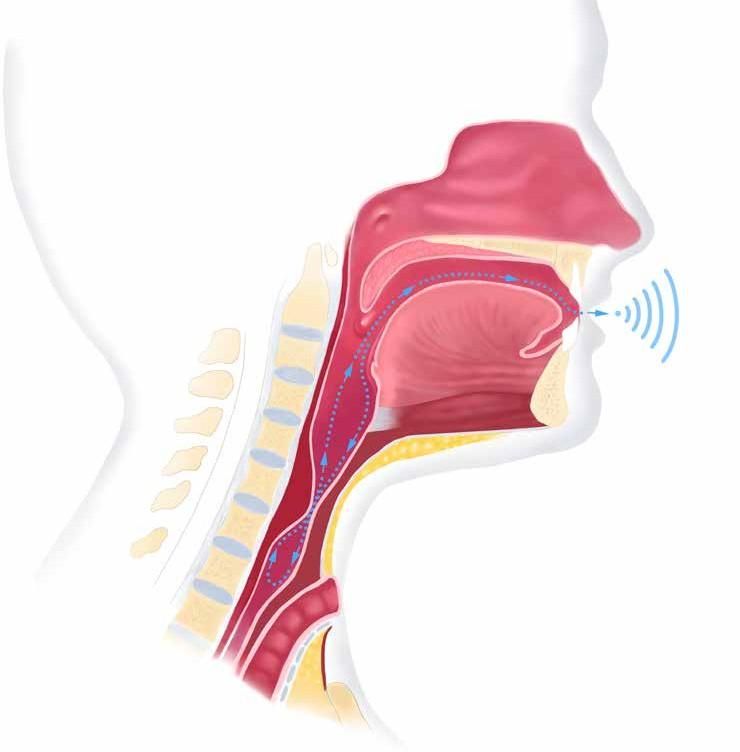
Esophageal speech uses your food pipe as the source of sound. You swallow a small amount of air into your food pipe and then push it back up. As the air moves up, it makes the tissue vibrate, and you shape the sound into words.
It is the oldest way of speaking after a laryngectomy, and was more common before voice prostheses were developed. It can be hard to learn. Only about one in three people who try it succeed. Because you need to swallow air for each phrase, you may have to speak in short sentences. Ask your speech therapist whether it could suit you.
Why people choose it
- No device needed
- Leaves your hands free
Caring for your voice prosthesis
The back of your voice prosthesis sits inside your food pipe, where everything you swallow passes by. Bacteria from your mouth and throat stick to it over time. Eventually they make the prosthesis leak, and a leak will make you cough when you drink.
A good cleaning routine keeps it working well and helps it last longer. Think of it like brushing your teeth.
Clean it at least twice a day. Ideally, clean it in the morning, in the evening and after every meal.
- Brush. Use the special cleaning brush made for your prosthesis to remove debris, much as you would use a toothbrush. Replace the brush once a month, or sooner if the bristles look worn or discoloured.
- Flush. After brushing, rinse the prosthesis with a flushing bulb, much as you rinse your mouth after brushing your teeth. While you are learning, start by flushing with air until you feel confident using water.
Checking for leaks. Take a sip of a coloured drink, such as coffee. If you cough, or see the drink at your stoma, your prosthesis may be leaking.
If it leaks through the middle. A small plug made for your prosthesis can stop the leak for a short time until you can have it changed. Push it into place with the back end of your cleaning brush. You cannot speak while the plug is in, so use it only while eating and drinking, and take it out after your meal.
A plug is a short-term fix. If your prosthesis is leaking, contact your clinician to have it checked or changed.
Speaking hands-free
Many people hope to speak without covering their stoma with a finger. It lets you talk while cooking, driving or gesturing, and many say it feels more like life before surgery.
Hands-free speech uses a special valve that fits onto your HME holder. When you speak, the valve closes on its own and sends the air through your voice prosthesis.
- Wait until you are confident. It works best once you are comfortable speaking with your prosthesis, used to wearing an HME, and your skin can take a strong adhesive seal.
- A support can help. In some people the stoma moves when they speak, which can loosen the adhesive or soften the voice. A support that fits over the adhesive can reduce this movement.
- Decide together. Your clinician will help you decide when to try it.